Blog
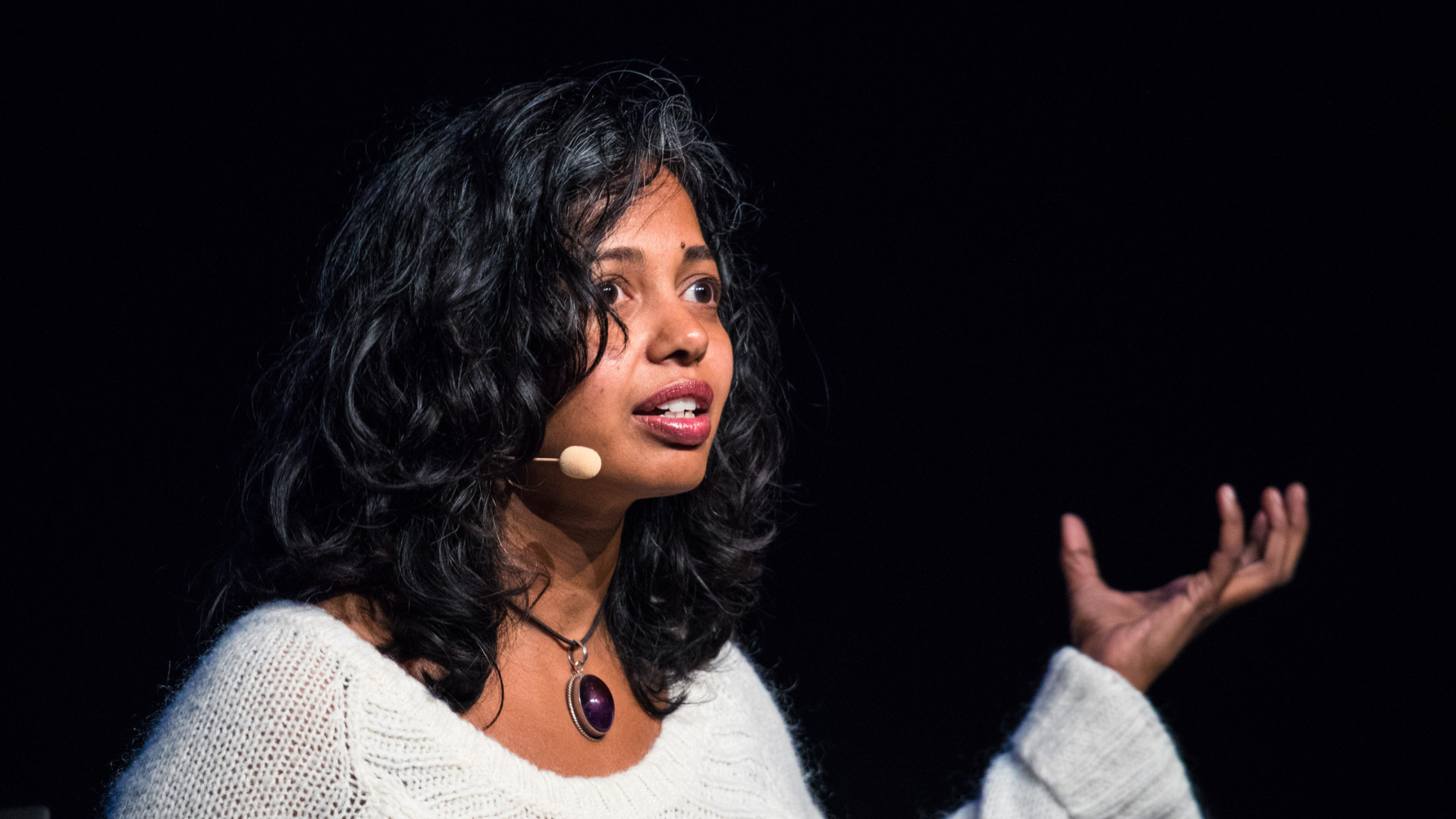
Indu Alagarsamy is Speaking at DDD Europe 2026
Posted on 2026-02-25 - 4 minute read
We are delighted to welcome Indu Alagarsamy to DDD Europe 2026 as a keynote speaker. Indu brings a rare combination of hard-won practical experience and deep conceptual thinking, and her keynote promises to be one of the most grounded and honest accounts of large-scale legacy modernisation you'll hear at a conference this year.
The Talk: Migrating from Monolith to Modern SaaS — Untangling 40 Years of Legacy
Here is a question that sits uncomfortably in the back of many engineers' and architects' minds: what does it actually take to modernise a mission-critical system built on four decades of accumulated decisions, workarounds, and tribal knowledge? Not a greenfield rewrite. Not a tidy case study with a happy ending and a clean architecture diagram. A real transformation, undertaken inside a real organisation, with real pressure to keep the business running throughout.
That is precisely what Indu will be speaking about. She led the modernisation of a deeply embedded legacy system at a large media organisation, evolving it from a 40-year-old monolith into a modern, service-oriented SaaS platform. The goal was not to throw everything away and start again, but to carefully unpack decades of implicit knowledge, disentangle complex business rules, and reshape existing workflows whilst creating new ones — all without disrupting the lines of business still depending on the original system.
If you have ever tried to draw a bounded context around something that has been growing organically since before some of your colleagues were born, you will understand exactly how difficult this is.
What You Can Expect
Indu will take us through how domain-driven design and systems thinking guided the decision-making process throughout the migration. She will talk about identifying bounded contexts, decoupling capabilities, and navigating the architecture patterns that proved useful, and those that did not. There will be honest discussion of stakeholder and team alignment, delivery challenges, and the constant tension between pragmatism and long-term goals.
One of the most important parts of the talk addresses something that migration projects often treat as an afterthought: decommissioning. A migration is not complete until the old system is switched off, and doing that without jeopardising revenue or business continuity requires its own careful thinking.
Perhaps the most compelling thread running through the whole talk is a reminder that Indu is not shy about stating upfront: the components, services, and architecture are not what determine whether a modernisation succeeds. Systems are for people. The socio-technical dimension — how teams are structured, how knowledge is transferred, how change is communicated across an organisation — is where migrations are won or lost. Understanding that is the real key.
Why This Matters
Legacy modernisation is one of the defining challenges of our industry right now. Many organisations are carrying systems that predate not just their current technology stack, but their current leadership, their current customers, and in some cases their current business model. The question of how to evolve those systems — carefully, without breaking things, whilst keeping the business running — is urgent and largely unsolved.
Indu has done it. She has the scars and the insights to prove it. We think her keynote will give you frameworks and honest lessons you can take back to your own organisation, whether you are just beginning to think about modernisation or are already deep in the middle of it.
About Indu
Indu Alagarsamy has spent 25 years working across publishing and media, healthcare, finance, biotech, and emergency services. Her most notable modernisation work was leading a complex legacy transformation at The New York Times. She currently works as a Principal Engineer at CircleCI, where she focuses on improving developer experience by enhancing CI/CD capabilities and enabling faster, more reliable software delivery.
She is a practitioner who thinks carefully about the craft. Indu leans heavily on Domain-Driven Design and Systems Thinking to make sense of complexity, but she borrows freely from design and other disciplines to shape approaches that fit the specific problem in front of her. She describes it as a remix, and the results speak for themselves.
She also writes regularly about what she learns (and sometimes what she unlearns) at domainanalysis.io.
We cannot wait to have her on the stage.
View Indu's full session details and grab your ticket at 2026.dddeurope.com.